
Homeowner's Guide to Roof Tear Offs in California
A roof can look worn for years before it finally demands action. Then a leak appears after a hard rain, shingles begin lifting in the wind, or granules collect heavily in the gutters. This guide to roof tear offs explains what actually happens when an aging roof is removed, what a careful contractor should inspect, and how homeowners can make sound decisions before a replacement begins.
A tear-off is more than taking old shingles to the dumpster. It is the point when the layers that protect your home are opened up and the condition of the roof deck, flashings, ventilation, and drainage becomes visible. Done correctly, it gives the new roofing system the stable, dry foundation it needs to perform for decades.
When a Roof Tear-Off Makes More Sense Than an Overlay
An overlay, sometimes called a recover, places new shingles over an existing layer. It can appear less expensive at first, but it is not always a responsible long-term choice. Existing roofing can conceal soft decking, deteriorated underlayment, failed flashing, and previous leak damage. Adding another layer also increases the roof’s weight and may be limited by local code or the roof system already in place.
A full tear-off is generally the better option when shingles are curling, cracked, missing, or near the end of their service life. It is also the right call when there has been active leaking, storm damage, poor installation, or more than one existing roof layer. For tile, metal, TPO, and low-slope roofing, the decision depends on the condition of the current system and how the new material will integrate with edges, penetrations, and drainage.
In Pleasanton and throughout the East Bay, roof replacements also need to account for warm summers, seasonal rain, wind exposure, and California energy requirements. A system that is simply installed over an unknown surface can leave expensive problems in place.
What Happens During a Professional Roof Tear-Off
A clear scope of work should explain how the crew will protect the property, remove the old material, inspect the deck, install the new system, and clean the site. Homeowners deserve to know those details before work starts, not after materials arrive.
Protecting the Home and Grounds
Before removal begins, an experienced crew protects landscaping, siding, windows, patios, and driveway areas as practical for the property. Tarps and ground coverings help collect debris, while designated staging areas keep materials and waste organized. Roof removal is noisy and creates vibration, so it is wise to move fragile wall items, secure pets, and keep vehicles away from the work area.
A responsible contractor also plans for access. Driveway space, gate width, overhead power lines, solar equipment, and landscaping can all affect where a dumpster and material deliveries can safely go.
Removing Old Roofing Materials
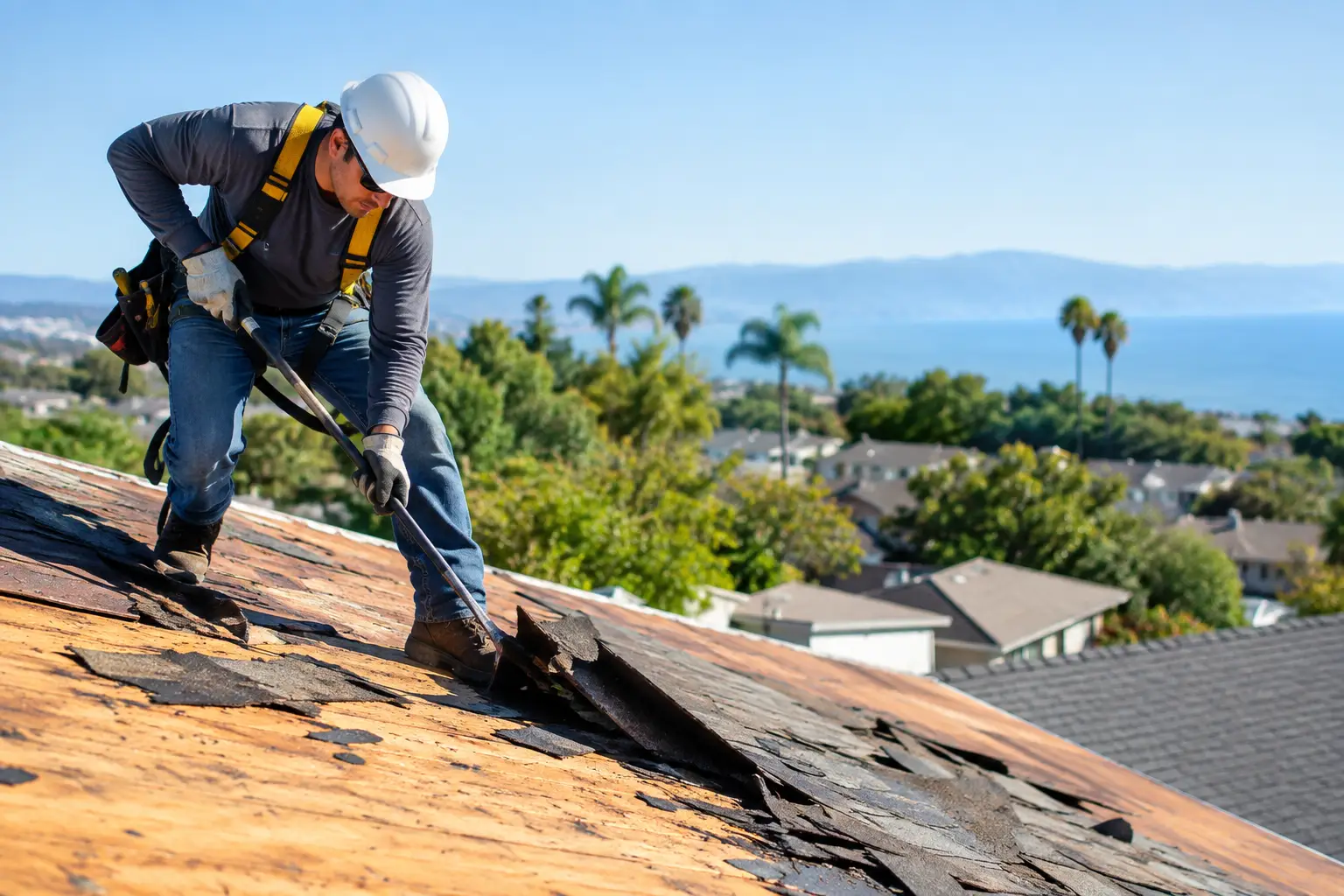
The crew removes shingles, tile, metal panels, underlayment, flashings, fasteners, and damaged edge materials that are part of the replacement scope. With an asphalt shingle roof, this means stripping the roof down to the wood deck. With tile, each piece must be handled carefully, and broken or unsuitable tile is separated for disposal. Metal and low-slope systems require their own removal methods because seams, insulation, and membrane details differ.
The goal is not speed alone. Nails and debris must be removed thoroughly so the new underlayment and roofing material lie flat and fasten correctly. Old materials should be loaded out continuously rather than left scattered around the property.
Inspecting the Roof Deck
The roof deck is one of the most important parts of the tear-off. It provides the surface that supports the entire roofing system, yet it cannot be fully evaluated while old roofing remains in place. Once exposed, the deck should be checked for rot, water staining, delamination, soft spots, cracked panels, and improper fastening.
Minor repairs may be anticipated in an estimate, but the exact extent of concealed damage cannot always be known until the roof is opened. A trustworthy contractor explains this possibility upfront, documents any discovered issues, and discusses repair options before covering the area again. Replacing damaged sheathing is not an upsell. It is necessary to keep a new roof from being installed over a weak base.
The New Roofing System Is More Than Shingles
Homeowners often focus on shingle color or tile profile, but the performance of a roof depends just as much on the components underneath and around the visible surface. A quality installation treats these parts as one coordinated system.
Underlayment provides a critical secondary barrier beneath shingles, tile, or metal. Depending on the roof type and local requirements, the system may include synthetic underlayment, self-adhering waterproof protection at vulnerable areas, and specialized details in valleys. Valleys channel a large volume of water, which is why proper material selection and installation there matter so much.
Flashing directs water away from transitions where roofs meet walls, chimneys, skylights, pipes, and other penetrations. Reusing bent, corroded, or poorly integrated flashing can compromise an otherwise new roof. Drip edge and eave details also help guide water into the gutter system instead of behind fascia boards.
Ventilation deserves a close look during replacement. A balanced attic ventilation plan can help reduce heat buildup and moisture concerns, but the right approach depends on attic configuration, insulation, roof geometry, and the home’s existing intake and exhaust paths. It should be evaluated, not assumed.
For California properties, a contractor may recommend cool-roof materials or Tile 24/CRRC-compliant options where appropriate. Architectural and dimensional asphalt shingles offer a familiar, cost-conscious choice with visual depth. Clay and concrete tile can provide long service life and a distinctive appearance, but require attention to weight and underlayment. Standing-seam and other metal roofing systems offer durability and clean lines, while TPO is often well suited to low-slope areas. The best material is the one that fits the structure, budget, code requirements, and desired maintenance level.
Permits, Estimates, and Change Orders
A roof replacement may require a building permit, depending on the scope and local jurisdiction. Permit requirements can involve reroof limits, structural considerations, energy standards, and inspections. A contractor should identify who is responsible for permit handling and include that information clearly in the proposal.
Read an estimate for more than the final price. It should identify the roofing material, underlayment, flashing approach, ventilation work, deck repair allowance if applicable, disposal, cleanup, warranty information, and exclusions. If gutters need replacement, this is also a practical time to address them. Custom-fabricated seamless gutters, correctly pitched and sized, help move roof runoff away from the foundation, fascia, and walkways.
Ask how change orders are handled if hidden deck damage or code-required corrections are found. A clear process protects both the homeowner and contractor. Vague language or a price that seems unusually low can lead to unwanted surprises once the old roof is gone.
How Long Does a Tear-Off Take?
Many single-family asphalt shingle tear-offs and replacements can be completed in a few days, but roof size is only one factor. Steep slopes, multiple levels, tile removal, complex valleys, chimney work, deck repairs, material availability, permitting, and weather can all affect the schedule.
Rain can delay exposed-roof work, and it should. A professional crew watches the forecast, stages materials carefully, and ensures the roof is protected if work must pause. Rushing through wet conditions to meet an arbitrary deadline is not good workmanship.
Cleanup Is Part of the Job
The work is not complete when the last ridge cap is installed. Final cleanup should include collecting debris, sweeping driveways and walkways, checking landscaping, and using magnetic tools to pick up loose nails around the property. Homeowners should also receive a final walkthrough that explains the completed roof, warranty coverage, maintenance needs, and any observations about gutters or drainage.
Eagle Home Solutions Inc. approaches tear-offs as an opportunity to correct details that may have been overlooked by a previous installation. Direct oversight, a clean job site, and clear communication matter because a new roof should bring confidence, not a new list of concerns.
A roof tear-off can feel disruptive for a short time, but it gives you a rare chance to see and strengthen the protective layers above your home. Choose a contractor who is willing to explain what they find, recommend only what the roof needs, and stand behind the work after the debris is gone.


Comments